
 Français
DEVLHON Consulting

Basel III : ESG Risk Management and Strengthening Capital Requirements
A few days ago, we unveiled our analysis of the ACPR’s 2023 annual report and diagnosed the Basel III regulations. Now, we focus on two aspects of this regulation: ESG risk management and the strengthening of capital requirements.
Basel III: Towards ESG Risk Management and Strengthening Capital Requirements for a Sustainable Banking Sector
The transition towards a more resilient and sustainable banking sector is at the heart of Basel III reforms, with a particular focus on the integration of environmental, social, and governance (ESG) risks, as well as the increase in capital requirements. These two aspects, although distinct, are interconnected and crucial for the stability and sustainability of the banking sector.
Integration of ESG Risks in Banking Management
ESG risks represent an essential dimension of risk management in the modern banking sector. Environmental, social, or governance-related, these risks have a direct impact on the financial stability of institutions. The integration of ESG risks into banking practices is a response to the growing expectations of investors and the public, and a necessity to ensure the long-term resilience of banks.
Basel III reforms require systematic management of ESG risks. Banks must integrate these risks into their overall risk assessments and financial reports. This approach aims to harmonize banking practices across the EU, ensuring transparency and accountability. The ACPR’s 2023 annual report highlights the importance of this integration to align the financial sector with sustainability and ecological transition objectives.
However, the integration of ESG risks presents significant challenges, such as the complexity of their evaluation, compliance costs, and the lack of standardized data. Despite these obstacles, the benefits include improved resilience, increased attractiveness for ESG-conscious investors, and enhanced reputation.
The ACPR has launched several initiatives to strengthen ESG risk management, including climate stress tests, supervision of climate transition plans, and the promotion of transparency. These efforts demonstrate significant progress, but also underscore the need for continuous efforts to maximize the opportunities offered by effective ESG risk management.
Strengthening Capital Requirements
The year 2023 marked a crucial step with the transposition of Basel III standards through the CRR3/CRD6 package, aiming to increase the resilience of banks by raising their capital base. These measures, including a stricter leverage ratio and the introduction of a capital floor, ensure a minimum level of capital to absorb potential financial shocks.
The increase in capital requirements imposes more rigorous risk management by banks, which must integrate ESG risks into their decision-making processes. This integration is crucial to align the banking sector with sustainability objectives, although it represents a significant challenge in terms of compliance and risk management.
The strict application of Basel III standards could affect the competitiveness of European banks compared to their international counterparts. Fair application of the rules is essential to maintain healthy competition. The ACPR report highlights the need for a transition period and targeted adjustments to help European banks adapt without losing their competitiveness.
Compliance with the new capital requirements incurs significant costs, especially for small and medium-sized banks. Despite these challenges, the increase in capital requirements is a necessary step towards greater resilience in the banking sector, preparing financial institutions to better absorb future shocks.
Conclusion
The integration of ESG risks and the increase in capital requirements under Basel III are essential for a sustainable and resilient banking sector. Although the implementation of these measures presents challenges, the benefits in terms of resilience, investor attractiveness, and reputation are significant. The initiatives detailed in the ACPR’s 2023 annual report show important progress but also highlight the need for continuous efforts to overcome obstacles and maximize the opportunities offered by these reforms.

Sustainable Finance and CSR by the ACPR
A few days ago, we announced our series of articles “DEVLHON Consulting Deciphers” in connection with the ACPR’s 2023 Annual Report.
Here is our second article related to the ACPR report, on sustainable finance and Corporate Social Responsibility (CSR).
Sustainable Finance and CSR: Initiatives and Supervision of Climate Risks by the ACPR
In 2023, the Autorité de contrôle prudentiel et de résolution (ACPR) intensified its efforts in sustainable finance and Corporate Social Responsibility (CSR). Integrating climate risks into the supervision of financial institutions and improving transparency on environmental, social, and governance (ESG) criteria have been at the heart of the ACPR’s initiatives this year.
Supervision of Climate Risks
The ACPR has implemented several measures to supervise and mitigate climate risks. In 2023, it launched a new climate stress test exercise dedicated to insurers. This exercise aims to assess the potential impact of climate risks on insurers’ activities, taking into account forward-looking and short-term scenarios. The results of these stress tests will provide a better understanding of insurers’ vulnerabilities to climate risks and guide future supervisory actions.
Additionally, the ACPR has been actively involved in European discussions on climate transition plans. It collaborated with European authorities to define the content of these plans and develop an appropriate supervisory framework. The goal is to integrate transition plans into prudential regulation and the supervision of banks and insurers, thereby ensuring proactive management of climate risks.
ESG Transparency and Reporting
Transparency from financial institutions regarding their consideration of ESG criteria is essential for sustainable finance. The ACPR has overseen insurers’ reports on the integration of environmental, social, and governance criteria, in accordance with Article 29 of the Energy-Climate Law of November 8, 2019. These reports must detail how insurers consider climate and environmental risks in their risk management.
Simultaneously, the ACPR has created an internal reflection group, the CAP (Collective Action for the Planet), to promote a culture of climate and environmental risks within the organization. This working group aims to rapidly and widely disseminate knowledge and best practices in climate risk management.
Awareness and Training Initiatives
In 2023, the ACPR participated in several initiatives to raise awareness among financial sector players about climate issues. It took part in a climate hackathon organized by the Bank of France, the Bank of Italy, the European Central Bank (ECB), and the European Commission. This event stimulated innovation and developed practical solutions to integrate climate risks into financial activities.
Challenges and Perspectives
Supervising climate risks and promoting sustainable finance pose several challenges. Financial institutions must adapt their risk management models to integrate climate risks, which may require significant investments in resources and skills. This includes, for example, advanced technological resources such as sophisticated climate modeling tools and robust data management systems. The necessary skills include climatology experts, sustainability analysts, and professionals trained in green finance. Moreover, the quality and consistency of ESG reports need to be improved to ensure effective and useful transparency.
In the long term, the ACPR’s initiatives in sustainable finance and CSR should contribute to strengthening the financial sector’s resilience to climate risks. Better management of these risks and increased transparency will better protect investors and the public while supporting sustainability objectives.
Conclusion
The year 2023 marked a significant milestone for sustainable finance and CSR under the supervision of the ACPR. The initiatives aimed at integrating climate risks into supervision and improving ESG transparency demonstrate a strong commitment to more sustainable finance. The ACPR’s ongoing efforts will help bolster the financial sector, making it more resilient and responsible, capable of facing future climate challenges.
These developments are detailed in the ACPR’s 2023 Annual Report, which highlights the efforts made to promote sustainable finance and integrate climate risks into financial supervision.

AML : New Regulations and Perspectives
A few days ago, we announced our series of “DEVLHON Consulting Decrypts” articles on the ACPR’s 2023 Annual Report.
Here is our second article in connection with the ACPR report, on the subject of the fight against money laundering and the financing of terrorism.
Anti-Money Laundering and Counter-Terrorism Financing: New Regulations and Perspectives
In 2023, significant advancements were made in the fight against money laundering and terrorist financing (AML-CTF) with the adoption of new regulations. The Prudential Control and Resolution Authority (ACPR) strengthened its supervisory framework and prepared the ground for harmonizing requirements at the European level under the aegis of the new European authority AMLA.
Strengthening the Regulatory Framework
The year 2023 was marked by the adoption of the anti-money laundering (AML) legislative and regulatory package aimed at harmonizing and strengthening AML-CTF requirements in Europe. This legislative framework provides for the creation of the European Anti-Money Laundering Authority (AMLA), responsible for directly supervising the most at-risk financial institutions at the European level. This new authority will enable more coherent and centralized supervision, thereby enhancing the effectiveness of anti-money laundering measures across the EU.
Supervision of Crypto-Assets
One of the major areas of this new regulation concerns crypto-assets. In 2023, the ACPR intensified its efforts to regulate crypto-asset service providers. The Transfer of Funds Regulation (TFR) imposes new requirements on crypto-asset service providers, obliging them to detect and stop criminal flows. This includes strict measures to ensure that crypto-asset transactions are transparent and traceable, thereby reducing the risk of these assets being used for money laundering and terrorist financing.
Supervision and Control Initiatives
The ACPR also undertook several supervisory initiatives in 2023. It updated its sectoral risk analysis for AML-CTF to incorporate market practice developments and new actors. Controls were intensified in the most sensitive sectors, such as fund transfers and crypto-assets, with 14 digital asset service providers (DASP) being inspected. Additionally, a thematic review on politically exposed persons (PEPs) was conducted to ensure that financial institutions comply with specific enhanced due diligence obligations for these clients.
Preparation for the Implementation of AMLA
In anticipation of the implementation of AMLA, ACPR teams are actively preparing. This new European entity, which will directly supervise the most at-risk financial institutions, represents a major shift in how AML-CTF is managed across Europe. The ACPR is participating in preparatory work to ensure a smooth and effective transition to this new supervisory framework.
Challenges and Perspectives
The implementation of these new regulations and supervisory structures represents a significant challenge for financial institutions. They must comply with stricter requirements and ensure increased transparency in their operations. Compliance costs can be high, especially for smaller institutions. However, these measures are essential to strengthen the fight against money laundering and terrorist financing, thereby ensuring the stability and security of the financial sector.
Conclusion
In conclusion, 2023 has been a pivotal year for the fight against money laundering and terrorist financing in Europe. The new regulations and the creation of AMLA mark a significant step towards harmonizing and strengthening AML-CTF measures at the European level. The ACPR plays a crucial role in this transition, preparing the ground for more effective and coherent supervision. In the long term, these efforts will help strengthen the financial sector, making it safer and more transparent.
These developments are detailed in the ACPR’s 2023 annual report, which highlights the ongoing efforts to strengthen AML-CTF mechanisms and ensure the security of the financial system.
(*) The most at-risk financial institutions at the European level include, for example, banks, payment companies, and fund managers.

Transposition of Basel III: Towards a More Resilient Banking Sector
A few days ago, we announced our series of ‘DEVLHON Consulting Decrypts’ articles on the ACPR’s 2023 Annual Report.
Here is our first article on Basel III.
Transposition of Basel III: Towards a More Resilient Banking Sector
In 2023, the European Union took a decisive step with the finalization of the transposition of Basel III standards. After several years of negotiations, the CRR3/CRD6 package was adopted, promising to strengthen the stability of the European banking sector from January 2025.
Strengthening Capital Requirements
Basel III, born in response to the 2008 financial crisis, primarily aims to increase the resilience of banks by raising capital requirements and introducing new risk management measures. Integrating these standards into European legislation harmonizes banking practices across the EU, ensuring a high level of financial stability.
The CRR3/CRD6 package introduces several major reforms, the most significant being the increase in capital requirements. Banks will now have to comply with a strict leverage ratio (a regulatory ratio that limits banks’ indebtedness by imposing a minimum threshold of equity relative to their total assets), limiting their debt relative to their equity. Additionally, a capital floor will be established for institutions using internal models for risk calculation, ensuring a minimum level of equity to withstand potential financial shocks.
ESG Risk Management
Another essential reform concerns the management of environmental, social, and governance (ESG) risks. Banks will now have to integrate these risks into their management and financial reports. This measure responds to the growing need to consider climate and social impacts in banking activities, thereby aligning the financial sector with sustainability goals.
Enhanced Transparency
Transparency is also reinforced with new disclosure obligations. Banks will have to provide detailed information on their risk exposure and the measures taken to manage them. This increased transparency aims to reassure investors and the public about the solidity and prudent management of financial institutions.
Implications for the Banking Sector
These reforms are crucial for strengthening the resilience of European banks. By increasing capital requirements and integrating ESG risks, banks will be better prepared to absorb losses and manage future crises. However, implementing these measures involves considerable challenges, particularly in terms of compliance costs and risk management. Smaller banks may feel the pressure of these new requirements.
Competitiveness of European Banks
The impact on the competitiveness of European banks is also a concern. While the transposition of Basel III is essential for financial stability, it is crucial that the application of the rules is fair across different jurisdictions. A transition period and targeted adjustments are planned to help European market and investment banks adapt without losing their competitiveness.
Conclusion
In summary, the transposition of Basel III marks a significant advance for the European banking sector. The new requirements aim to increase resilience and transparency, but their implementation will require substantial efforts from financial institutions. In the long term, a harmonized and fair application of these standards will be essential to maintain the stability and competitiveness of the European banking sector.
These reforms are detailed in the 2023 annual report of the ACPR, which highlights ongoing efforts to ensure a strong and resilient financial sector in the face of potential crises.
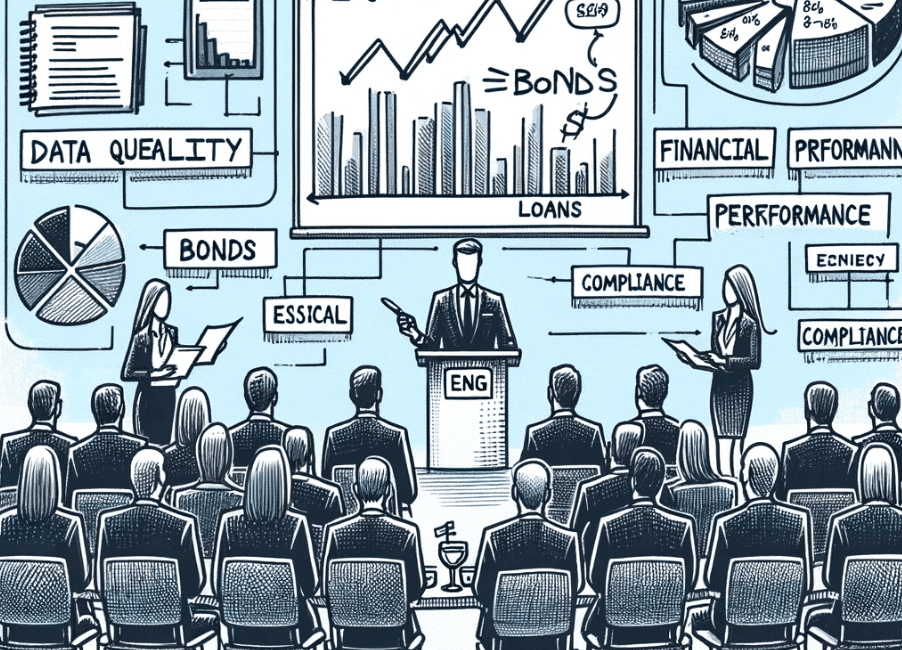
Conference Debrief: ESG Bonds and Loans
📢 Conference Debrief: ESG Bonds and Loans 📢
📈 DEVLHON Consulting, in co-organization with the CNO, successfully hosted a conference on “ESG Bonds and Loans: Which Data Processing to Choose and Its Financial Impact on the Company”.
👉 Yoann Lhonneur, President of DEVLHON Consulting, shared valuable insights on the importance of ESG data automation and its impact on companies’ financial performance, particularly focusing on:
- Automation and Data Quality: Emphasizing the importance of integrating technological solutions to ensure automated and accurate collection and processing of ESG data, thereby reducing errors and increasing efficiency.
- Impact on Financial Performance: Highlighting the use of advanced tools for reporting and managing green bonds and loans, enabling better assessment of financial risks and opportunities related to ESG criteria.
- Compliance and Regulatory Monitoring: Stressing the importance of maintaining rigorous regulatory monitoring and ensuring that companies comply with non-financial reporting requirements, thereby contributing to greater transparency and compliance.
🍸 Thank you to all participants. The presentation was followed by a friendly cocktail reception that facilitated enriching exchanges.
#ESG #Bonds #CNO #DEVLHONConsulting

DEVLHON Consulting Deciphers: ACPR Annual Report
We are excited to announce the upcoming publication of our articles based on the 2023 ACPR Annual Report. These articles provide a detailed analysis and insights on the following key topics:
- The Transposition of Basel III: Towards a More Resilient Banking Sector : Discover how new capital requirements and ESG risk management are enhancing banking stability.
- Combating Money Laundering and Terrorist Financing: New Regulations and Perspectives : An overview of regulatory reforms and the ACPR’s supervision initiatives for crypto assets.
- Sustainable Finance and CSR: Initiatives and Supervision of Climate Risks by the ACPR : Dive into the ACPR’s efforts to integrate climate risks and promote sustainable finance.
Stay tuned to read these in-depth analyses on our website.

EU Confirms Start of Final Basel III Rules in January 2025
On Thursday, May 30, 2024, the European Union officially approved the implementation of the final batch of Basel III rules, a set of stricter bank capital standards, starting in January 2025. These new rules build on safeguards introduced after taxpayers had to bail out lenders during the global financial crisis over a decade ago.
The Basel III rules, developed by the Basel Committee comprised of banking regulators from the world’s major economies, are already largely implemented. However, this final batch includes a key innovation known as the output floor.
Our Regulatory Excellence : https://www.devlhon-consulting.com/en/service/excellence-reglementaire/
An Output Floor for Fair Competition
This safeguard aims to prevent large banks, which can use their own computer models to calculate capital buffers, from exploiting the system to the detriment of smaller banks, which must use more conservative calculation methods established by regulators.
“The rules adopted today will ensure that European banks can continue to operate in the face of economic shocks,” said Vincent Van Peteghem, Belgium’s Finance Minister, who currently holds the EU presidency. “They will also make the banking sector more sustainable and better able to deal with the green and digital transitions. This is an important step towards deepening the Banking Union.”
Harmonization of Requirements and New Regimes for Crypto Assets
Besides the Basel standards, the adopted package includes other rules to harmonize minimum requirements across the 27 member countries for authorizing branches of banks headquartered outside the EU.
The package also includes transitional capital requirements for banks’ holdings of crypto assets and changes to improve how lenders manage environmental, social, and governance (ESG) risks.
Strengthening the Resilience and Supervision of European Banks
The new rules adopted by the European Council aim to make EU banks more resilient to economic shocks, strengthen their supervision, and improve risk management. These reforms are crucial to ensuring that European banks can withstand economic disruptions and support the transition towards more sustainable and digital economies.
Vincent Van Peteghem emphasized the importance of these reforms in deepening the Banking Union and enhancing the sector’s resilience. The updated rules amend the Capital Requirements Regulation and the Capital Requirements Directive, translating the Basel III standards into EU legislation.
Rules to Be Published Soon
The adoption of these rules marks the final step in the implementation process. The amended regulation and directive will be published in the EU’s Official Journal and will enter into force 20 days later. Member states will have 18 months to transpose the directive into national legislation, with the regulation becoming applicable from January 1, 2025.
This adoption by the EU of the final Basel III rules represents a significant step in strengthening the stability and resilience of the European banking sector in the face of future economic challenges.
Our Regulatory Excellence : https://www.devlhon-consulting.com/en/service/excellence-reglementaire/
Sources : https://www.tradefinanceglobal.com/posts/eu-confirms-january-2025-start-for-final-basel-rules/

Surecomp Revolutionizes Digital Trade
Surecomp Revolutionizes Digital Trade with Rapid eBL Transactions on the RIVO Platform
Surecomp®, a global leader in trade finance solutions, announced the successful completion of electronic Bill of Lading (eBL) transactions via its collaborative RIVO™ platform. This milestone marks a significant step towards the full digitization of global trade, demonstrating a dramatic improvement in process efficiency and transparency.
OUR TRADE FINANCE OFFER : Offer AML-CFT Trade Finance (1) (1)
eBL Transactions Completed in One Hour
Following initial transactions processed in September last year, this new phase focused on optimizing the eBL workflow, reducing the processing time to just one hour. Two separate pilot transactions were conducted simultaneously, involving MSC Mediterranean Shipping Company (MSC), the world’s largest shipping company, as the carrier generating the eBL.
The first transaction included MAN Truck and Bus, Commerzbank AG, and Bangkok Bank, while the second involved Voith, Bayerische Landesbank, and Indonesian bank PT Bank BTPN Tbk (Bank BTPN). Through integration with the WaveBL platform, electronic Bills of Lading were efficiently generated and attached to the Letter of Credit (LC) transactions in RIVO™. This process facilitated a smooth transition from the physical to the digital realm, making the documents accessible and transferable to all relevant parties within just one hour.
Centralization and Simplification of the Process
Live status updates on the WaveBL platform throughout the process enabled the presentation of clean documents under an electronically issued Letter of Credit (eUCP LC). This centralization and simplification of the eBL process via RIVO™ will ease adoption by banks, eliminating the need for separate integration and training for each eBL solution provider.
Ofer Ein Bar, VP Financial Institutions at WaveBL, stated: “The WaveBL platform issues thousands of electronic Bills of Lading worldwide every day. Some of the largest global shipping companies already trust us to lead the trade revolution. We are confident in our partnership with Surecomp. The success of this transaction will accelerate banks’ adoption of electronic trade documents, marking a significant step toward global trade digitization.”
A Giant Leap Towards Digitizing Global Trade
Enno-Burghard Weitzel, Chief Solutions Officer at Surecomp, added: “We were able to demonstrate how centralizing eBL management on RIVO can significantly enhance process efficiency and operational stability. Aggregating digital documents from various platforms represents a significant departure from traditional, time-consuming paper-based processes that often take days or even weeks. By fostering eBL adoption among banks using RIVO to centralize workflow, Surecomp remains committed to pioneering trade finance innovation, and the success of this eBL under LC marks a substantial leap forward in digitizing global trade.”
With this success, Surecomp® continues to push the boundaries of technology and innovation in trade finance, facilitating a faster and more efficient transition towards fully digital processes.
OUR TRADE FINANCE OFFER : Offer AML-CFT Trade Finance (1) (1)